
Back to Health Resources
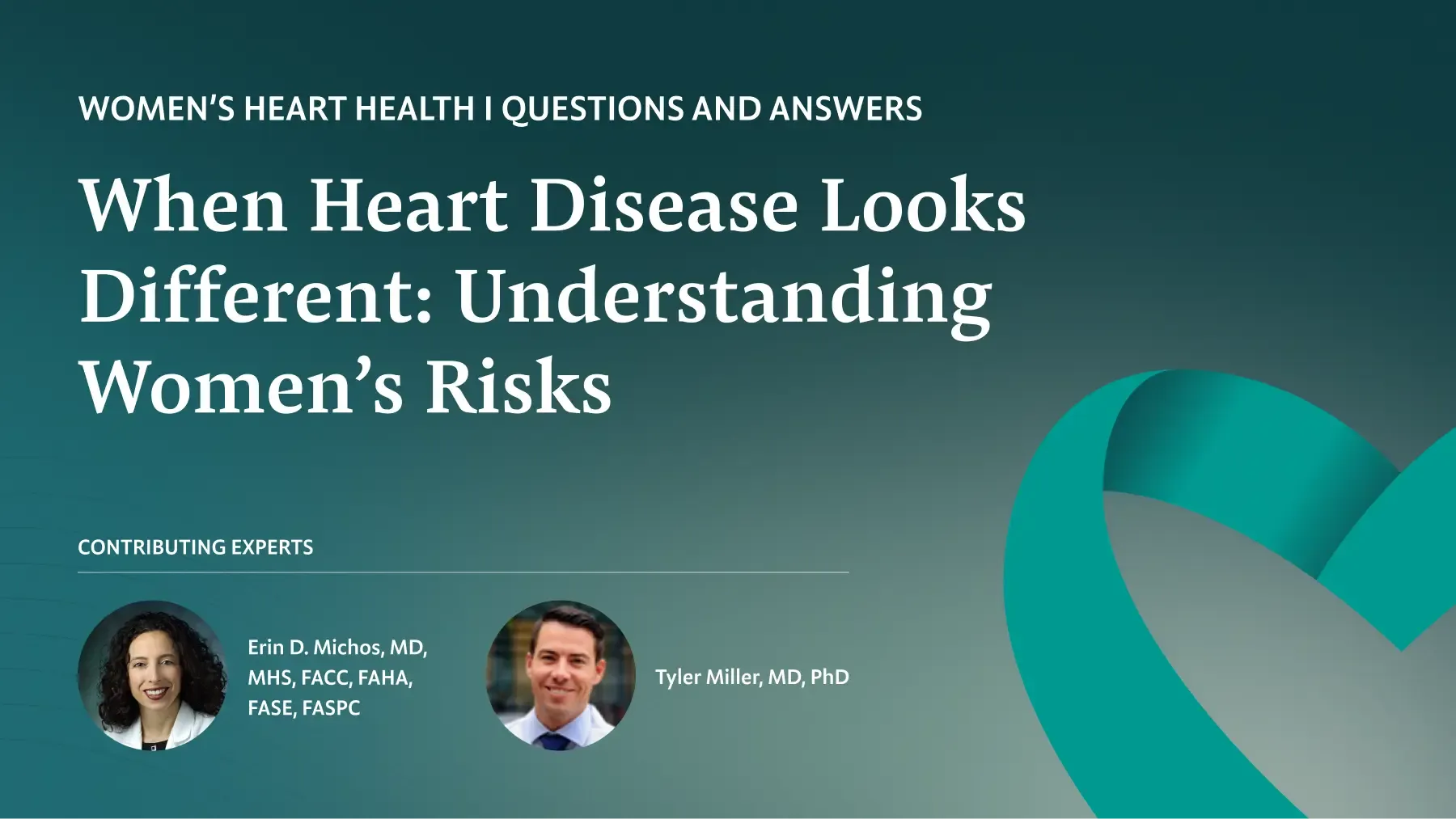
When Heart Disease Looks Different: Understanding Women's Risks

Ask the Experts
Women's Heart Health | Questions and Answers
Our recent online session, When Heart Disease Looks Different: Understanding Women's Risks revealed many questions from our attendees. Weve compiled a list of the most common questions, along with answers from our experts.
Gender, Hormones, and Population Trends
The symptoms are often the same.
It's the increase of heart disease being diagnosed in younger adults. Cardiovascular disease rates are actually decreasing in older adults. Younger adults are less healthy than they used to be in generations past. We need to optimize a healthy lifestyle from birth.
Preeclampsia increases long-term cardiovascular risk, doubling the likelihood of hypertension, heart attack, stroke, and heart failure later in life, making early monitoring and lifestyle management essential.
Menopause and hot flashes signal declining estrogen, which can worsen lipid profiles, endothelial function, and vascular health, increasing long-term risk of heart disease in women.
Autoimmune diseases like rheumatoid arthritis and scleroderma increase cardiovascular risk through chronic inflammation, accelerating atherosclerosis. Biologics that reduce systemic inflammation may lower this risk, but the effect varies by drug, disease severity, and adherence to standard heart-protective therapies.
Yes — there are some differences in SCAD outcomes: women often present after emotional stress, with more non‑chest symptoms, and longer hospital stays. However, long-term major adverse cardiac event rates and mortality are similar between men and women.
General and Cross-Cutting Cardiovascular Questions
Ischemic colitis is primarily linked to reduced blood flow in intestinal small vessels, and while it shares risk factors, it isn't directly caused by ischemic heart disease.
Women's heart attack symptoms often include chest pressure or discomfort, but may also involve shortness of breath, nausea, vomiting, fatigue, jaw or back pain, and lightheadedness. Symptoms can be subtler than in men, sometimes delaying recognition and treatment.
Call 911, find someone nearby if you're able to, take chewable aspirin if you have it, or nitroglycerin if you have been prescribed due to a known risk and sit or lie down. Don't drive yourself to the ER.
Muscle spasms are usually unrelated to blocked arteries; they typically stem from electrolyte imbalances, dehydration, or muscle strain, not heart disease.
COVID-19 infection can increase cardiovascular risk by causing inflammation, endothelial injury, clotting abnormalities, and long-term heart strain, raising the likelihood of heart attack, stroke, arrhythmias, and heart failure. In contrast, COVID vaccines are extremely safe for the heart; rare myocarditis cases occur mainly in young males, are usually mild, and are far outweighed by the protective cardiovascular benefits of preventing infection. Overall, infection poses far higher cardiovascular risk than vaccination, and vaccines help reduce heart-related complications by preventing severe COVID-19.
Good oral hygiene reduces gum inflammation and bacterial burden, lowering systemic inflammation. While it doesn't guarantee heart disease prevention, maintaining dental health may modestly reduce cardiovascular risk, especially in people with existing risk factors.
Yes. Hiatal hernia can cause chest pain, pressure, or discomfort that mimics heart-related symptoms like angina or heart attack.
Cardiovascular disease increases dementia risk by reducing blood flow to the brain, causing strokes, and promoting vascular damage. Hypertension, atherosclerosis, and heart failure all contribute to cognitive decline over time.
Atherosclerosis cannot be fully "cleaned out" mechanically except by bypass or stenting, which treat blockages but not underlying plaque. Natural regression is limited; intensive lifestyle changes, medications, and risk-factor control can stabilize, slow, or modestly reduce plaque over time.
- High blood pressure (hypertension)
- High LDL cholesterol / low HDL cholesterol
- Diabetes or insulin resistance
- Smoking / tobacco use
- Obesity, especially abdominal obesity
- Physical inactivity
- Unhealthy diet (high saturated fat, sugar, processed foods)
- Family history / genetics of heart disease
Other contributors include chronic stress, sleep disorders, and chronic inflammation.
Cholesterol, Lipids, and Related Markers
Lipoprotein(a) — usually written Lp(a) — is a genetically-determined lipoprotein particle. It's basically an LDL particle ("bad cholesterol") with an extra protein attached called apolipoprotein(a). The extra protein sticking off the side makes it even more sticky to blood vessels than LDL, which can lead to blockages. High Lp(a) levels are associated with higher risk of heart attack, stroke, and aortic valve disease, no matter what your cholesterol numbers are. Levels are mostly genetic and don't change much with lifestyle.
Apolipoprotein B (ApoB) is the primary structural protein on all lipoproteins. Each particle has exactly one ApoB, so the ApoB level is basically a count of all the plaque-forming particles in your bloodstream. ApoB has been shown to better predict cardiovascular risk than LDL-C (the cholesterol content of LDL), because it measures how many particles there are, not just cholesterol mass across all particles.
These tests aren't included in standard blood panels for a number of reasons:
- They’re more expensive than basic lipid tests.
- Doctors were trained for decades to use LDL-C and HDL-C.
- ApoB and Lp(a) have gained attention only in the last ~10–15 years.
- Not all insurers cover them. For Lp(a), many insurers justify no coverage because there is currently no approved medication to specifically treat high Lp(a). However, there are things that can be done to decrease your overall risk, so medical groups, like the National Lipid Association, recommend that every person be tested at least once in their lives. For ApoB, some insurers point to the standard practice of using LDL as the reason people don’t need ApoB. This is starting to change.
For Lp(a), there hasn’t been a targeted, FDA-approved medication. There are medications made to lower your cholesterol, and some of these, like PCSK9 inhibitors (Repatha, Praluent, Leqvio, etc.) do have some small impact on Lp(a) However, they’re not yet approved for treating Lp(a). Statins, the most common cholesterol-lowering medication, do not reduce Lp(a) at all. Drugs are currently being tested in clinical trials and are showing very promising results in lowering Lp(a). What we need to show is that they don’t just lower levels, but they actually prevent heart attacks and strokes. In the meantime, there are still risk factors you can address through approved medications and lifestyle changes that can lower heart disease risk generally. If you have very high Lp(s), you should work with your doctor to create a holistic plan to reduce your overall heart disease risk.
Medications to lower Lp(a) could be available in the next few years, depending on how clinical trials go. However, they'll likely first be available to high-risk individuals with moderately high Lp(a) and may take longer to be prescribed to others.
The first thing to note is that cholesterol in your body is in the form of small particles. These particles can be different sizes in different people, and the different sizes can have an impact on how they act in the body. LDL-C measures overall cholesterol mass (size + number), while ApoB measures particle number.You can have “normal” LDL-C but too many particles. A high ApoB means higher cardiovascular risk. Management focuses on reducing particle number. More and more, ApoB is being recognized as the more accurate risk marker, and many clinicians now treat according to ApoB targets, not LDL-C alone.
Most doctors are not routinely ordering Lp(a): testing rates remain very low, though they are increasing. So yes — patients concerned about Lp(a) should ask their provider specifically about getting it checked.
PCSK9 inhibitors, like Repatha (evolocumab) and Praluent (alirocumab), are a relatively new class of injectable cholesterol-lowering drugs. Experts generally view them as highly effective and well-tolerated for lowering LDL cholesterol. Especially for patients who are at high cardiovascular risk or who can't reach LDL goals with statins alone.
When saturated fat intake is decreased, the liver increases LDL receptors, which pull LDL particles out of the blood faster. Lifestyle can usually lower LDL-C depending on baseline diet and genetics. The biggest cardiovascular improvements come from:
- Reducing refined carbs and sugars
- Reducing alcohol
- Increasing omega-3s (fatty fish; EPA supplements)
- Losing weight
- Regular aerobic exercise
No. But improving lifestyle habits can reduce your cardiovascular risk overall.
High triglycerides are important to take seriously, but the type of danger depends on how high they are and why they're elevated. The good news: triglycerides can usually be lowered through lifestyle changes and large improvements are usually possible.
Lp(a) carries oxidized lipids which causes inflammation in the arteries in that particular area. CRP (C-reactive protein) reflects inflammation throughout your body. If you have high Lp(a) and high CRP it's a marker of a much higher cardiovascular risk. While Lp(a) is genetic and largely unchangeable by lifestyle factors, CRP can usually be changed. Managing CRP dramatically reduces Lp(a)-related risk.
Imaging and Diagnostic Tests
Yes, there is the Coronary Artery Calcium Score (CAC), the Coronary CT Angiography (CCTA), AI-Enhanced Plaque Analysis (like Cleerly), Carotid Ultrasound / CIMT (Carotid Intima-Media Thickness), Invasive procedures like Intravascular Imaging, and other functional tests that show the effects, but not the actual plaque.
A CT Coronary Artery Calcium Score (CAC score) is one of the most powerful tools in preventive cardiology. It measures the amount of calcified plaque in the coronary arteries using a very low-radiation CT scan. The result shows the measure of hidden atherosclerosis—something blood tests alone cannot show. If you have a high CAC score, your doctor will likely start treatment to lower your ApoB, and manage other cardiovascular disease markers like inflammation, blood pressure, and metabolic disease. This can be done with medications and lifestyle changes.
A Carotid Intima–Media Thickness (CIMT) test is an ultrasound that measures the thickness of the inner two layers of your carotid artery (the "intima" and "media"). It is used to detect early arterial aging and early atherosclerosis before calcified plaque develops.CIMT is fairly accurate for identifying early, pre-calcified atherosclerosis, predicting future cardiovascular risk (more accurate than LDL alone), and showing early arterial aging, even when CAC = 0. However, results vary widely and depend heavily on the operator and the equipment used.
Cleerly is a very promising tool for a detailed look at coronary plaque. It's not a full replacement for invasive angiography or functional testing when those are needed, but it helps. For patients who are "intermediate risk," have high-risk biomarkers (like Lp(a)), or want to track disease progression proactively, Cleerly might be a good choice.
Plaque buildup and coronary calcium are not easily "erased," but they can be slowed, stabilized, or in some cases partially reduced, depending on the type of plaque and the therapy used.
It's best for intermediate-risk adults where statin therapy or other interventions are uncertain, regardless of gender or age.
High Lp(a) alone doesn't always trigger therapy, but it increases urgency for imaging and LDL monitoring. CAC or CCTA can show early plaque that may otherwise be missed. Lifestyle and aggressive LDL management is the most common treatment, until Lp(a)-specific drugs are widely available. Family history and rapidly progressive plaque are strong indications to consider earlier, more aggressive intervention.
Using Zio can lead to earlier diagnosis of AFib (or other rhythm disorders), potentially preventing stroke or guiding treatment. It's not for imaging or plaque assessment, but rather for arrhythmia detection and quantification. It's especially helpful in scenarios where arrhythmias are suspected but not confirmed, or when rhythm monitoring is needed to guide stroke risk / anticoagulation decisions.
Immediately after a heart attack or stent, your doctor will likely perform an ECG, troponin, and baseline echocardiogram tests. Within a week, they'll do another echocardiogram, followed later by stress tests and other monitoring heart tests to watch for continued function.
Medications and Treatments
Statins lower LDL, reduce heart attacks and strokes, and benefit both women and older adults. Side effects are usually mild—mainly muscle aches or slight glucose increases. Serious risks are rare. Women and older adults may be more sensitive to doses, so therapy should be individualized, but overall benefits outweigh risks for most.
Statins get a bad reputation due to online misinformation, fear of muscle pain, and confusion between common aches and true side effects. Most reactions are mild—muscle soreness, slight glucose rise, or rare liver enzyme changes. Serious complications are extremely uncommon, and the cardiovascular benefits greatly outweigh the risks for most people.There are alternatives to statin therapy if needed. Lower doses, every other day dosage, or taking in combination with a non-statin.
Statins can slightly raise blood glucose, especially in people already at risk, leading to prediabetes in some cases. However, cardiovascular benefits overwhelmingly outweigh this small risk.
Reducing CV disease, including stroke, which in turn reduces vascular disease/dementia, reduces inflammation, but the main benefit is CV risk reduction.
Generally no. Statins only work while taken, so stopping them usually lets LDL rise again and may increase cardiovascular risk. Most people need long-term therapy unless risk becomes very low or alternative treatments are used.
Alternatives to statins include ezetimibe, PCSK9 inhibitors (Repatha, Praluent), bempedoic acid, bile acid sequestrants, and lifestyle measures like diet, exercise, weight loss, and fiber. These help lower LDL when statins aren't tolerated or insufficient.
New cholesterol medications are very effective: PCSK9 inhibitors and inclisiran lower LDL 50–70%, bempedoic acid 15–25%, and ezetimibe 15–25%. Insurance often covers them for high-risk patients, familial hypercholesterolemia, or statin intolerance, usually requiring prior authorization.
If someone is intolerant or allergic to statins or blood pressure medications, doctors explore alternatives: for cholesterol, options include ezetimibe, PCSK9 inhibitors, bempedoic acid, and lifestyle changes; for blood pressure, other drug classes can be tried. Monitoring, gradual dose adjustments, and specialist consultation ensure safe, effective management.
GLP-1 drugs, such as semaglutide, improve blood sugar control, support significant weight loss, and have demonstrated reductions in major cardiovascular events—particularly in patients with type 2 diabetes or obesity—making them valuable for both metabolic and heart risk management.
Small vessel disease affects tiny coronary arteries and is managed mainly with medications—beta-blockers, calcium channel blockers, nitrates, ranolazine—and lifestyle changes. Large-vessel disease involves major arteries, treated with medications plus possible stents or bypass. Both benefit from statins, and controlling risk factors like high blood pressure and diabetes.
Hereditary transthyretin amyloidosis with cardiomyopathy (ATTR-CM) is treated primarily with tafamidis, which stabilizes transthyretin to slow disease progression. Gene-silencing therapies like patisiran and inotersen reduce mutant protein production. Management also includes standard heart failure treatments, and in select patients, liver transplantation can lower circulating mutant transthyretin.
Women generally have good long-term survival after coronary artery bypass (CABG), often 10–15+ years, but outcomes depend on age, comorbidities (diabetes, kidney disease), heart function, number of vessels bypassed, surgical complexity, and adherence to medications and lifestyle changes post-surgery. Early complications can also influence survival.
Partially. Heart muscle damaged by a heart attack cannot fully regenerate, but surrounding tissue can strengthen, and therapies—medications, rehab, and lifestyle—improve function and prevent further damage.
New blockages after stent placement are detected via symptoms, stress tests, or imaging (CCTA, angiography). Management includes optimizing medications, controlling risk factors, lifestyle changes, and, if needed, repeat angioplasty or stenting to restore blood flow.
Evidence-based heart health supplements include CoQ10 (supports energy, may reduce statin muscle symptoms), berberine (helps blood sugar and lipids), L-arginine (may improve endothelial function), and beetroot/nitrates (lower blood pressure). Garlic has modest LDL and blood pressure benefits. Always combine these with lifestyle and consult a physician.
Estrogen can benefit cardiovascular health by raising HDL, lowering LDL, improving endothelial function and vessel dilation, reducing inflammation, and supporting vascular repair. However, postmenopausal estrogen therapy does not reliably prevent heart disease and carries risks of blood clots, stroke, and other complications.
Heart disease can often be slowed, stabilized, or partially improved, but full reversal is rare. Treatments—including medications (statins, blood pressure drugs, antiplatelets), lifestyle changes (diet, exercise, quitting smoking), and procedures (stents, bypass)—can reduce plaque progression, improve heart function, and lower risk of heart attack or stroke.
Ornish and Esselstyn protocols use plant-based diets, exercise, stress management, and support to stabilize or modestly reverse heart disease. Studies show LDL and blood pressure improvements, but long-term adherence is challenging. Best outcomes occur when combined with standard medications, especially in high-risk patients.
Metabolic, Endocrine, and Nutritional Health
Yes. Even with well-controlled diabetes, cardiovascular risk remains higher than non-diabetic individuals due to long-term metabolic and vascular changes.
Yes. Low ferritin or iron deficiency can reduce how oxygen gets around your body, worsen heart failure symptoms, and increase fatigue, indirectly affecting cardiovascular health.
Thyroid disorders and metabolic syndrome both elevate cardiovascular risk. Hyper- or hypothyroidism can alter heart rate, blood pressure, and lipid levels, while metabolic syndrome—characterized by insulin resistance, obesity, hypertension, and dyslipidemia—accelerates atherosclerosis. Combined, they significantly increase heart attack, stroke, and heart failure risk, making early detection and management crucial.
Low-carb or keto diets can improve weight, blood sugar, and triglycerides, but may raise LDL cholesterol in some. Heart health benefits depend on diet quality, long-term adherence, and individual risk factors.
Obesity significantly increases heart disease risk by promoting hypertension, diabetes, dyslipidemia, and inflammation. Rising obesity rates drive higher cardiovascular disease prevalence, earlier onset, and worse outcomes, contributing to recent upward trends in heart attacks, heart failure, and related complications.
Chronic sleep deprivation adversely affects cardiovascular health by increasing blood pressure, sympathetic activity, inflammation, and insulin resistance. It worsens lipid profiles, promotes obesity and diabetes, and elevates risks of arrhythmias, heart attack, stroke, and heart failure, making adequate sleep essential.
Depression raises heart disease risk by triggering chronic inflammation, dysregulated stress hormones, and autonomic imbalance. It promotes unhealthy behaviors—poor diet, inactivity, smoking—and reduces medication adherence, collectively increasing the likelihood of hypertension, atherosclerosis, heart attacks, and adverse cardiovascular outcomes.
Lifestyle and Prevention
Mediterranean and plant-based diets reduce cardiovascular risk by improving lipids, lowering blood pressure, reducing inflammation, and supporting weight and glucose control.
Low-fat, whole-food diets excluding oils, added sugars, and excess sodium can stabilize or modestly reverse atherosclerosis, improve blood pressure, lipids, and insulin sensitivity, and reduce heart disease progression, especially when combined with exercise and other lifestyle interventions.
Lifestyle changes—like diet, exercise, weight loss, and smoking cessation—can begin affecting cholesterol within 4–6 weeks, with more significant improvements usually seen after 3–6 months of consistent adherence. Full benefits depend on individual baseline levels, genetics, and overall lifestyle.
Yes. For mild-to-moderate cardiovascular risk, diet and exercise alone can often normalize blood pressure, improve lipid profiles, reduce weight, and enhance insulin sensitivity, sometimes delaying or avoiding medication. Regular monitoring ensures risk factors remain controlled.
HDL can be raised and LDL lowered naturally through a heart-healthy diet rich in soluble fiber, healthy fats, and low in saturated/trans fats; regular aerobic and resistance exercise; weight management; avoiding smoking; and managing stress and sleep. These strategies complement medications and improve overall cardiovascular health.
Women in perimenopause can proactively reduce cardiovascular risk through a heart-healthy diet rich in fruits, vegetables, whole grains, and healthy fats, regular aerobic and strength exercise, maintaining healthy weight, and monitoring blood pressure, cholesterol, and glucose. Additional strategies include stress management, adequate sleep, avoiding smoking, moderating alcohol, and consulting clinicians about symptom management or hormone therapy.
Screening and Risk Evaluation
Routine CAC or advanced imaging screenings for women are not universally recommended. They are considered for women with intermediate or high cardiovascular risk, borderline cholesterol, family history, or other risk-enhancing factors.
C-reactive protein (CRP) is a marker of systemic inflammation. Elevated CRP levels indicate higher cardiovascular risk, even when cholesterol appears normal, helping identify individuals who may benefit from more aggressive prevention strategies like statins, lifestyle changes, or closer monitoring. It is especially useful for intermediate-risk patients to refine risk assessment beyond traditional factors.
Non‑invasive early detection tests for vascular disease include: carotid‑intima media thickness (CIMT) via ultrasound, pulse‑wave velocity (PWV) measuring arterial stiffness, ankle‑brachial index (ABI) for peripheral artery disease, and coronary artery calcium (CAC) scoring.
Elevated Lp(a) should prompt more proactive risk assessment, even in otherwise healthy people. Because Lp(a) independently contributes to atherosclerosis, clinicians may recommend a one‑time Lp(a) test and then use results to justify risk‑enhancing strategies—such as imaging (e.g., CAC scanning) or more intensive LDL‑lowering therapy.
CONTRIBUTING EXPERTS

Erin D. Michos, MD, MHS, FACC, FAHA, FASE, FASPC
is a Professor of Medicine within the Division of Cardiology at Johns Hopkins University. She is the Director of Women’s Cardiovascular Health and the Associate Director of Preventive Cardiology. She’s Core Faculty for the Advanced Lipid Clinic, and Co-Editor in Chief for The American Journal of Preventive Cardiology.

Tyler Miller, MD, PhD
Assistant Professor, Case Western Reserve University | Advisor, Care Access
Dr. Miller is the Paul and Betsy Shiverick Professor of Immuno-Oncology at Case Western Reserve University. As a physician-scientist, he applies his expertise in molecular pathology, biology, genomics, and technology development to advance treatments for patients.
DISCLAIMER
The information provided on Care Access is intended for informational purposes only and should not be considered as a substitute for professional medical advice, diagnosis, or treatment. Always seek the advice of your physician or other qualified healthcare provider with any questions you may have regarding a medical condition. Our products and content are not intended to diagnose, treat, cure, or prevent any disease.
Explore More Health Resources



STORIES from the Heart

