
Back to Health Resources
Lp(a) and Inflammation: A Double Threat to Cardiovascular Health

Inflammation and Lp(a): A Dangerous Combination
Heart disease impacts 64 million people in the United States and more than 1.4 billion around the world.¹ While many people already know about “bad cholesterol” like LDL-C (low-density lipoprotein) and its effects on heart health, fewer are aware of another serious risk: Lipoprotein(a), or Lp(a), which is not typically measured in standard heart health tests.¹ High Lp(a), especially when paired with inflammation, can sharply increase the risk of cardiovascular disease.² This makes broader awareness urgently needed.
What Is Lp(a)?
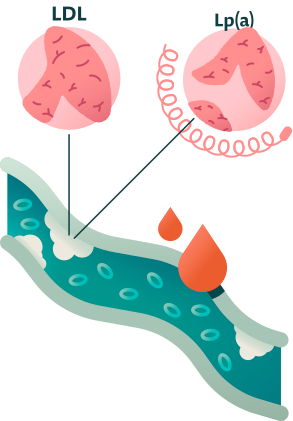
Lp(a) is a cholesterol-carrying particle made by the liver and released into the bloodstream.¹ It is similar to LDL-C, but it has an extra protein called apolipoprotein(a) attached to it.¹ That added protein changes the particle’s behavior and increases its capacity to damage blood vessels.³
Like LDL-C, Lp(a) can accumulate in artery walls and contribute to plaque buildup.³ Over time, this buildup can narrow arteries and slow blood flow to the heart, brain, and other organs.³ Lp(a) also increases clotting and inflammation, which makes the built-up plaque more likely to rupture and cause a heart attack or stroke.³

Can Lp(a) Be Treated?
Unlike LDL-C, which can generally be treated or at least managed with medication and lifestyle changes, Lp(a) levels are largely determined by genetics.¹ This means that for most people, their Lp(a) levels are pre-determined and stay fairly constant throughout life.¹ This is important because it means diet, exercise, and the most common cholesterol treatments will not significantly lower Lp(a) levels.⁶ There are potential medications being studied for their effectiveness in lowering Lp(a), but none have been FDA approved yet.⁷
Research studies consistently show that if your Lp(a) level is high, you have a greater chance of developing heart disease, stroke, and problems with your heart valves – especially aortic stenosis.²,⁸ Because it is both commonly occurring and difficult to modify with existing standard treatments, Lp(a) remains a major focus of ongoing cardiovascular research.⁶
Inflammation: The Other Danger
Inflammation is the body’s response to injury or infection. It is usually helpful in the short term, like when you cut your finger and it swells to assist in healing. But chronic inflammation, which is longer-lasting and lower-grade, can damage blood vessels over time by making them more fragile and also more adhesive.⁴ This makes it easier for cholesterols like Lp(a) to get into vessel walls and form plaques.³
Doctors can measure inflammation with tests like high–sensitivity C-reactive protein (hs-CRP).⁵ Higher hs-CRP levels are associated with a greater risk of heart problems,⁵ making it important to get tested when clinically appropriate.
How Lp(a) and Inflammation Work Together
Researchers now understand that Lp(a) and inflammation don’t just exist side by side. They can actually make each other worse, and this happens in a number of ways.

Lp(a) itself promotes inflammation.
Lp(a) particles carry oxidized phospholipids, and these molecules activate immune cells and drive the release of inflammatory molecules in the bloodstream.³ This supports plaque development and may make that plaque more unstable.³

Lp(a) is associated with greater plaque buildup over time.
In a long-term imaging study, scientists found that having higher Lp(a) levels was linked to more plaque buildup in the coronary arteries — the vessels that feed blood to the heart.⁴

Inflammation may even raise Lp(a) levels.
Some studies suggest that when the body is inflamed, Lp(a) levels can rise as part of the response.³ This creates a feedback loop in which Lp(a) promotes inflammation and inflammation then further elevates Lp(a).³
Because of this two-way interaction, people who have both elevated Lp(a) and chronic inflammation may face particularly high cardiovascular risk.² A large study found that high Lp(a) increased the risk of serious heart events like heart attacks and strokes — even when inflammation indicators were low.² This suggests Lp(a) is dangerous on its own, but it can be even worse when inflammation is present.⁵
High levels of Lp(a) are linked to inflammation-related activity within blood vessels, supporting the view that Lp(a) may contribute directly to artery-wall inflammation and plaque instability.³ Ongoing studies are focused on clarifying these mechanisms and identifying treatments that can interrupt this process.⁷
How Can You Manage This Risk?
Because Lp(a) is largely genetic, it is important to measure it at least once in a person’s life, especially if there is a family history of early heart disease.¹ Some providers may recommend this even if your LDL-C cholesterol levels are normal,¹ since Lp(a) can add risk that routine lipid panels may miss.⁶
If Lp(a) levels are high, all hope isn’t lost. Even though Lp(a) levels themselves can’t be mitigated through diet and exercise, most doctors recommend reducing overall cardiovascular risk as a form of management.⁶ That includes lifestyle changes such as nutrition, physical activity, smoking cessation, blood pressure control, and use of existing medications when necessary.⁶

Researchers are also working on new treatments targeting Lp(a) directly. A recent study found that the investigational medication lepodisiran can reduce Lp(a) in the blood by more than 90%.⁷,¹¹ While these early results are promising, larger clinical trials are still needed to confirm that lowering Lp(a) indeed translates into fewer heart attacks, strokes, and other cardiovascular events.⁷
Anti-inflammatory therapies are also being studied as a form of risk management. Medicines that reduce inflammation may also lower the risk of heart attacks in people with existing heart disease, and reducing inflammation may help stabilize plaque formations and reduce the chance of rupture.⁵,⁹
The Big Picture
Lp(a) and inflammation each raise the risk of heart disease, and together they create a compounded threat.²,³ Lp(a) carries dangerous cholesterol deep within artery walls and promotes inflammation, while inflammation makes vessel walls more vulnerable to further lipid buildup and plaque injury.³,⁴ This reinforcing cycle can accelerate plaque progression and increase plaque instability, ultimately raising the likelihood of heart attack and stroke.²
Understanding both Lp(a) and inflammation helps doctors better assess heart disease risk. It also underscores the need for new tests and treatments that address these factors directly.⁶,⁷ As this understanding evolves and deepens, combined assessment of Lp(a) and inflammatory markers may become a more routine way to identify high-risk patients earlier and prevent serious cardiovascular events.
CONTRIBUTING EXPERT

Chandar Abboy, MD
Dr. Abboy is a physician board-certified in internal medicine, pulmonary disease, critical care medicine, and sleep medicine. He is a Principal Investigator at Care Access, overseeing multiple clinical trials.
SOURCES
- https://www.cdc.gov/heart-disease-family-history/about/about-lipoprotein-a.html
- https://jamanetwork.com/journals/jama/fullarticle/2815506
- https://pubmed.ncbi.nlm.nih.gov/36333256/
- https://pubmed.ncbi.nlm.nih.gov/37048611/
- https://www.acc.org/latest-in-cardiology/journal-scans/2021/09/07/19/25/high-sensitivity-crp-modifies
- https://jamanetwork.com/journals/jamacardiology/fullarticle/2820719
- https://pubmed.ncbi.nlm.nih.gov/39959232/
- https://pubmed.ncbi.nlm.nih.gov/34503676/
- https://pubmed.ncbi.nlm.nih.gov/39216091/
- https://pubmed.ncbi.nlm.nih.gov/40284189/
- https://www.reuters.com/business/healthcare-pharmaceuticals/experimental-lilly-drug-cuts-genetic-heart-disease-risk-factor-by-94-trial-2025-03-30/
DISCLAIMER
The information provided on Care Access is intended for informational purposes only and should not be considered as a substitute for professional medical advice, diagnosis, or treatment. Always seek the advice of your physician or other qualified healthcare provider with any questions you may have regarding a medical condition. Our products and content are not intended to diagnose, treat, cure, or prevent any disease.
Explore More Health Resources



STORIES from the Heart